A newly released New Zealand study reveals endangerment of native birds due to a seemingly harmless hobby.
by Hannah Moore
May 6, 2015—It turns out that bird feeding is for the birds—the non-native ones, that is. A study released Monday revealed that bird feeding attracts a more diverse range of birds, which leads to decreased populations of native bird species, reported The Guardian.
The study’s research watched 23 residential Auckland gardens for 18 months and compared the gardens where bird food was left out and those where it was not, according to The Telegraph. In the gardens with food, bread and seeds were the fare. The study found that gardens with available food attracted a wider variety of species than those that did not—and four times as many nonnative species.
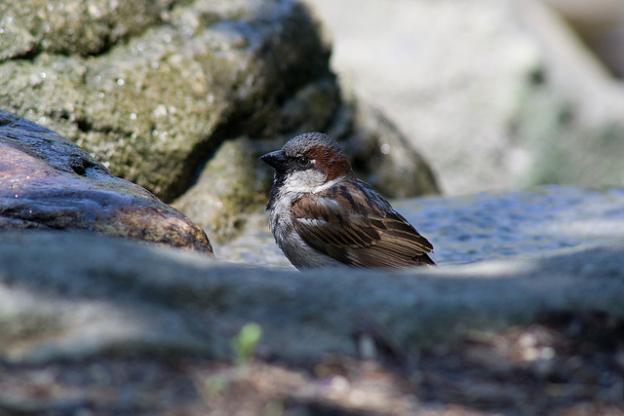
The most frequently observed birds were house sparrows, Eurasian blackbirds, silvereye and common myna. Thirty-three species were recorded, 16 native and 17 non-native. During the entire study, 18,228 birds of these 33 species were seen or heard.
The grey warbler population decreased considerably during the 18-month period. This bird was voted New Zealand’s “Bird of the Year” in 2007.
While people may enjoy encouraging a variety of species to visit their gardens by leaving the food out, the development of this diverse population isn’t pretty. Non-native birds are aggressive toward native birds and stop them from accessing the gardens, even if the native bird had frequented the site before.
Native birds that rely on gardens due to the disappearance of other habitats could be driven out of regions.
Bird feeding has other problems as well. Feeders and bird tables can transmit bird-borne diseases and the food can cause malnutrition.
Bird feeding is one of the most popular hobbies in the world. A 2006 Fish and Wildlife report revealed that more than 55 million Americans aged 16 or older feed wild birds.
Despite its popularity, feeding wild birds is controversial among ecologists and birders. The disagreement stems from the lack of evidence of the effects of feeding wild birds. It is known that bird feeding affects wild populations, but unknown how exactly they are affected.
Changing the food in bird feeders and planting fruit-providing trees and water could help counteract the problem, according to Josie Galbraith, doctoral candidate at the University of Auckland.
Category: