A new outdoor education bill could help kids in California's underserved communities get better access to Nature's classroom.
by Xochitl Rojas-Rocha
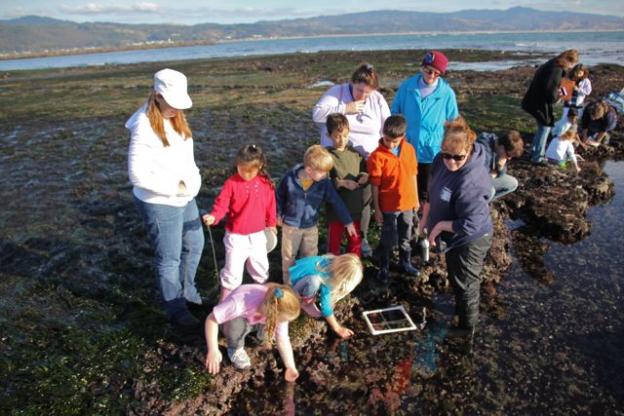
April 30, 2015—Sailing a schooner from Monterey up the Central California coastline is not an opportunity every 14-year-old gets—I was lucky. Now a student dedicated to ocean stewardship, I remember how excited I was to learn about the life churning beneath the schooner’s hull. Camp SEA Lab, the Seaside-based program that funded this voyage for me and countless other teenagers in the intervening years, is one of many organizations devoted to getting children out of classrooms and into California’s naturally beautiful landscape. Now, thanks to an outdoor education bill heading to the state Assembly floor, more children from underserved and at-risk communities will have those same opportunities.
With their budgets taking hits, it has become increasingly difficult for schools to find funding for outdoor programs. Underfunded schools in big cities suffer the most risk of losing access. The Marine Science Institute, a non-profit group based in Redwood City, uses a sliding scale system that lowers its school program costs for underprivileged children from areas like Oakland, Richmond and East Palo Alto. “We’re scrapping around every year to try and get enough funding to pay for our school programs,” says Marilou Seiff, the Institute’s executive director.
If it passes, AB988 may help alleviate this problem. The bill, co-authored by Assembly Speaker Toni Atkins (D-San Diego) and District 29 Assemblymember Mark Stone (D-Santa Cruz), calls for an Outdoor Environmental Education and Recreation Grants Program that would award state government grants to public and non-profit organizations like the Marine Science Institute. Through the Department of Parks and Recreation, the program would pay special attention to helping schoolchildren from underserved and at-risk communities. According to the bill, providing these children with more outdoor experiences will “lead to more healthy lifestyles, better educational outcomes, and improvements to the overall well-being of California citizens, communities, and our natural environment.”
The biggest funding hurdle, say both Seiff and Bonny Hawley of the Friends of Santa Cruz State Parks, is transportation. According to Seiff, it can cost up to $1000 to bus a classroom of students to a site.

And while programs like Friends’ “Parks Online Resources for Teachers and Students” (PORTS) connect students digitally with on-site park rangers, the child does not necessarily form the same bond with the outdoors. “Our first choice would be to get children to the parks. There are always more resources that are needed to get kids outdoors, especially from underserved communities,” says Hawley.
Engaging with the outdoors environment does more than keep kids healthy—it may also help them build on their class material. “We view outdoor education as a great supplement to textbook learning, because the outdoors is really the most dynamic classroom you can find,” says Dan Haifley, executive director of O’Neill Sea Odyssey, in an interview with the Santa Cruz Sentinel.
Read about O'Neill Sea Odyssey's oceangoing classroom
Read about the PORTS Program connecting kids with a park ranger
Outdoor educational groups like the Marine Science Institute and O’Neill Sea Odyssey can also expose children to new career choices and bolster their self-confidence. “We have students who have gone through our program who didn’t feel that they were strong in science, but have turned around and become scientists and science teachers,” Seiff says. At least one of these children grew up to work for the Institute itself and now devotes her time to outreach.
In an era where the world supports over 7 billion people, fostering a love of the outdoors early on may help raise environmental awareness in future generations. Seiff recalls previously high levels of pollution and plans to fill in parts of the San Francisco Bay. “You look at it like, ‘Yeah, you can fill it in. What’s the big deal?’ But once you learn about it, you want to protect it.”
Category: