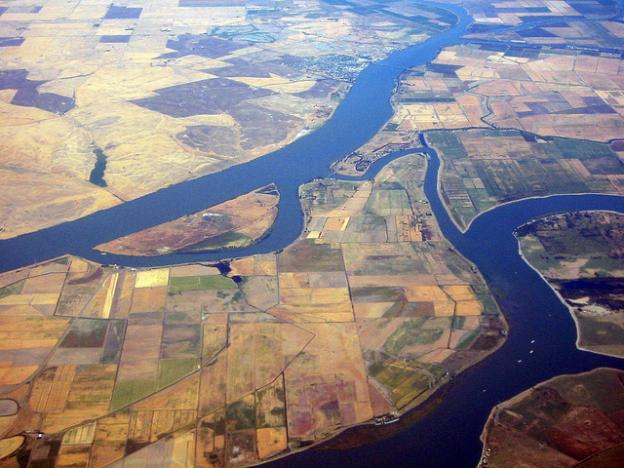
Habitat restoration reduction could spell trouble for endangered salmon and delta smelt.
by Hannah Moore
April 30, 2015—State officials announced plans Thursday to dramatically decrease habitat restoration while tunnels to deliver mass amounts of water are under construction, reported the Washington Post.
The 50-year habitat restoration plan now calls for 30,000 acres of wetland and wildlife land to be rehabilitated instead of the originally intended 100,000 acres, according to ABC News. The amount of habitat to be restored was cut due to the plan’s high complexity and the need to get permits from federal wildlife agencies amid uncertain future climate change effects.
The restoration cuts will take place during the construction of two tunnels under the Sacramento-San Joaquin River Delta set to deliver water to farms and millions of people statewide.
The original habitat restoration plan was projected at $8 billion. The new plans announced Thursday lower the cost to $300 million.
Gov. Jerry Brown supports the new initiative, stating that it will speed up the pace of restoration while fixing California’s aging water infrastructure. But environmentalists, conservationists and Delta farmers criticize the plan. The groups argue that San Francisco Bay salt water will diminish Delta water quality and damage the habitat of endangered salmon and small delta smelt.
The cost of the tunnels is estimated at $15 billion. The Bay Delta Conservation Plan, under development for eight years, outlines the construction of two 40-foot wide, 30-foot high tunnels to send water around the delta from the Sacramento River. The water currently irrigates 3 million acres of Central Valley farmland. It supplies water to 25 million people as far south as San Diego.
The new plan was created to stabilize water supply for cities and farms. Officials have split the plan into two parts: construction of the tunnels and effort to fix wildlife habitat along waterways.
California is entering its fourth year of drought. Mandatory water restrictions are being imposed on residents and many farmers are left with minimal or no surface water to irrigate with.
Only 5 percent of the state’s wetlands currently remain.
Category: